
Resources
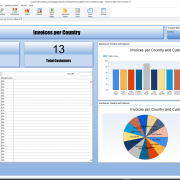
Nucleon Atomic 4 releases includes some bug fixed and performance improvements. Nucleon Atomic has two Setup Files:
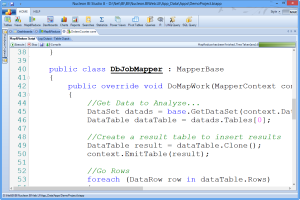
Nucleon Atomic is a distributed computing Framework which supports the map&reduce programming model for data computing and data processing using WCF streaming. It is build on the top of .Net Framework with WCF and pure C# Language.
For more information:
http://nucleonsoftware.com/products/nucleon-atomic
This is just a simple article visually explaining SQL JOINs.
I’m a pretty visual person. Things seem to make more sense as a picture. I looked all over the Internet for a good graphical representation of SQL JOINs, but I couldn’t find any to my liking. Some had good diagrams but lacked completeness (they didn’t have all the possible JOINs), and some were just plain terrible. So, I decided to create my own and write an article about it.
Read More: https://www.codeproject.com/Articles/485777/SQL-Joins
This article attempts to highlight the latest developments in both the Mongo open-source document database and the open-source official C# driver. This piece has now been updated to reflect version 4.0.2 of the database and version 2.7 of the C# driver.
Document databases store information relating to a record in a contiguous blob of data known as a document . A document’s structure usually follows the JSON format and consists of a series of key-value pairs. Unlike the schema of relational databases, the document’s structure does not reference empty fields. This flexible arrangement allows fields to be added and removed with ease. What’s more, there is no need to rummage about in various tables when trying to assemble the data; it’s all there in one solid block. The downside of all this is that Document databases tend to be bulky. But, now that disk drives are in the bargain basement, the trade off between speed of access and storage costs has shifted in favour of speed and that has given rise to the increased use of document databases. The Large Hadron Collider at Cern uses a document database but that’s not why it keeps breaking down.
Read More: https://www.codeproject.com/Articles/524602/Beginners-guide-to-using-MongoDB-4-0-2-and-the-off
A NoSQL database is a schema free and not relational database RDBMS) which provides a mechanism for distributed data storage and retrieval.
NoSQL, which encompasses a wide range of technologies and architectures, seeks to solve the scalability and big data performance issues that relational databases weren’t designed to address. NoSQL is especially useful when an enterprise needs to access and analyze massive amounts of unstructured data or data that’s stored remotely on multiple virtual servers in the cloud.
Contrary to misconceptions caused by its name, NoSQL does not prohibit structured query language (SQL). While it’s true that some NoSQL systems are entirely non-relational, others simply avoid selected relational functionality such as fixed table schemas and join operations. For example, instead of using tables, a NoSQL database might organize data into objects, key/value pairs or tuples.
Business intelligence (BI), is an umbrella term that refers to a variety of software applications used to analyze an organization’s raw data. BI as a discipline is made up of several related activities, including data mining, online analytical processing, querying and reporting. BI is a technology-driven process for analyzing data and presenting actionable information to help corporate executives, business managers and other end users make more informed business decisions.
BI encompasses a variety of tools, applications and methodologies that enable organizations to collect data from internal systems and external sources, prepare it for analysis, develop and run queries against the data, and create reports, charts, dashboards and data visualizations to make the analytical results available to corporate decision makers as well as operational workers.
The potential benefits of business intelligence programs include accelerating and improving decision making; optimizing internal business processes; increasing operational efficiency; driving new revenues; and gaining competitive advantages over business rivals. BI systems can also help companies identify market trends and spot business problems that need to be addressed.
BI data can include historical information, real time and as well as new data gathered from source systems as it is generated, enabling BI analysis to support both strategic and tactical decision-making processes. Initially, BI tools were primarily used by data analysts and other IT professionals who ran analyses and produced reports with query results for business users. Increasingly, however, business executives and workers are using BI software themselves, thanks partly to the development of self-service BI and data discovery tools.
Business intelligence combines a broad set of data analysis applications, including ad hoc analysis and querying, enterprise reporting, online analytical processing (OLAP), mobile BI, real-time BI, operational BI, cloud and software as a service BI, open source BI, collaborative BI and location intelligence. BI technology also includes data visualization software for designing charts, reports, maps and other infographics, as well as tools for building BI dashboards and performance scorecards that display visualized data on business metrics and key performance indicators in an easy-to-grasp way. BI applications can be bought separately from different vendors or as part of a unified BI platform from a single vendor.
BI programs can also incorporate forms of advanced data analytics, such as data mining, data visualization, predictive analytics, text mining, GIS maps, statistical analysis and big data analytics. In many cases though, advanced analytics projects are conducted and managed by separate teams of data scientists, statisticians, predictive modelers and other skilled analytics professionals, while BI teams oversee more straightforward querying and analysis of business data.
Business intelligence data typically is stored in a data warehouse or smaller data marts that hold subsets of a company’s information. In addition, Hadoop, Nucleon grid like Map&Reduce systems are increasingly being used within BI architectures as repositories or landing pads for BI and analytics data, especially for unstructured data, log files, sensor data and other types of big data.
Before it’s used in BI applications, raw data from different source systems must be integrated, consolidated and cleansed using data integration and data quality tools to ensure that users are analyzing accurate and consistent information.